
RFID identifies the event. Pillar makes it operational.
Turn RFID reads into status, location, assignments, alerts, and accountable action.
A signal is not a solution.
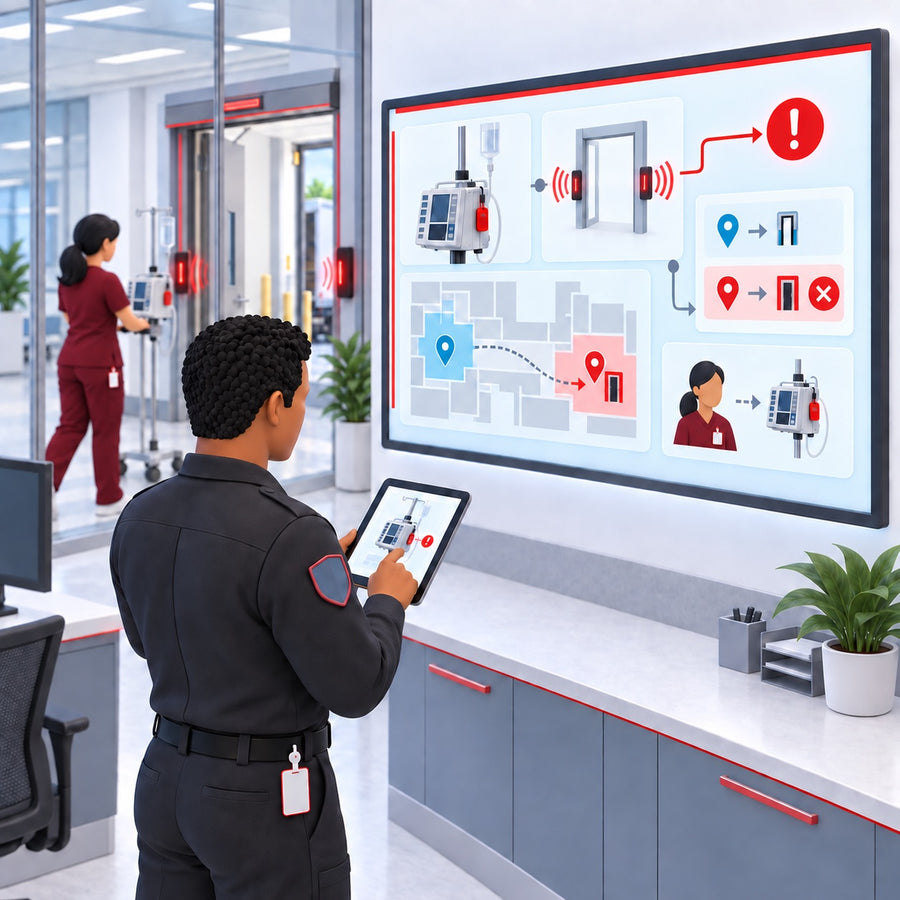
RFID detects an item or movement, but it does not explain what the event means.
PillarTrak applies status, location, workflow, and alert rules so each read becomes an accountable operational action.



Common uses.
Where the signal earns its place.
Use RFID where faster, hands-free identification improves inventory, movement, custody, exceptions, or reporting.
Inventory and asset visibility
Identify physical items and record RFID activity across receiving, storage, assignment, movement, maintenance, and return workflows.
Location and movement events
Use supported readers and defined read zones to record when items or approved identifiers enter, leave, or move through configured areas.
Chain of custody
Connect physical activity with the responsible user, department, transaction, or operational record.
Exceptions and alerts
Notify the right team when an item is missing, overdue, misplaced, expired, or moving outside the expected workflow.
Reporting and operational insight
Turn repeated RFID activity into patterns that help teams understand demand, bottlenecks, loss, and resource use.
We do not force RFID into a workflow where a simpler method would work better.
RFID is one of several identification methods Pillar supports, alongside NFC, QR codes, barcodes, and direct user entry. We select the method that best fits the workflow rather than forcing RFID where a simpler approach would work better.
Reader placement, tags, zones, and the physical environment are evaluated as part of the deployment so the technology supports the operation reliably.
Physical signals connected to operational records.
PillarTrak RFID can operate as a focused workflow or provide RFID events to inventory, custody, incident, and other operational applications where supported.
PillarTrak RFID software is designed, developed, deployed, and supported by our U.S.-based team. Deployment hardware is selected from supported manufacturers according to the needs of the environment.
Start with the workflow, not the hardware catalog.
Tell us what needs to be identified, tracked, verified, or acted upon. We will help determine whether RFID belongs in the solution.
Reader and tag options, integration approach, and an implementation plan, provided on request before any pilot starts.
Request documentation